
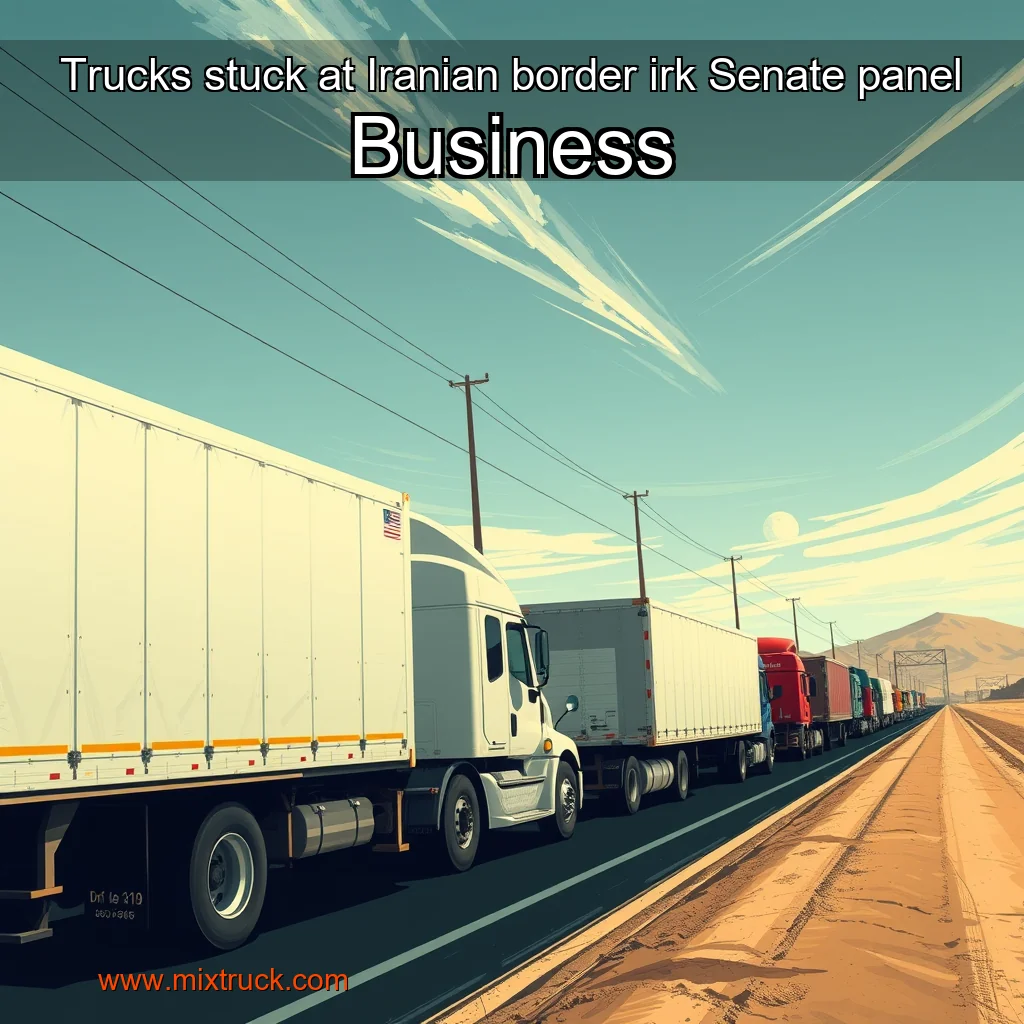
The situation has been ongoing for several months, with no clear resolution in sight.
The Root Cause of the Crisis
The crisis at the Pakistan-Iran border is a complex issue with multiple factors contributing to its persistence. At the heart of the matter is the lack of a formal agreement between the two countries regarding the customs procedures and regulations governing trade.
The committee members were visibly frustrated with the issue, and the representative emphasized that the trucks were stuck due to the lack of a suitable bridge.
The Stuck Trucks Conundrum
The Iranian representative’s words highlighted the gravity of the situation, and the committee members were determined to find a solution. The stuck trucks were not only a logistical nightmare but also a significant economic burden on the traders.
The Urgent Need for Action
The committee’s decision to write a letter to the prime minister highlights the gravity of the situation. The issue at hand is not just a local problem, but a national concern that requires immediate attention. The committee’s urgency is underscored by Senator Mandiwalla’s statement that the situation has reached a critical point. Key points to consider: + The issue has reached a critical point + The situation is deeply concerning for the country as a whole + Immediate action is required
The Impact on the Country
The committee’s concerns are not just limited to the local community, but have far-reaching implications for the entire country. The situation is not just a matter of local politics, but a national issue that requires a collective response. The impact on the country can be seen in: + Economic instability + Social unrest + National security concerns
The Call to Action
The committee’s decision to write a letter to the prime minister is a call to action that requires immediate attention.
The Need for a Banking Channel
The absence of a formal banking channel between Pakistan and Iran has hindered trade between the two countries. This lack of infrastructure has resulted in increased costs, longer transit times, and reduced efficiency in the trade process. Key challenges faced by Pakistani importers and exporters: + Higher transaction costs due to the need for intermediaries + Longer transit times, resulting in increased storage and handling costs + Reduced efficiency in the trade process, leading to decreased competitiveness
+ Reduced trade volumes due to increased costs and longer transit times + Decreased competitiveness of Pakistani exports in the Iranian market + Increased reliance on informal channels, leading to potential security risks
Proposed Solution
The committee suggested including Pakistani importers and clearing agents in the process to help facilitate smoother transactions.
Published in Dawn, February 27th, 2025