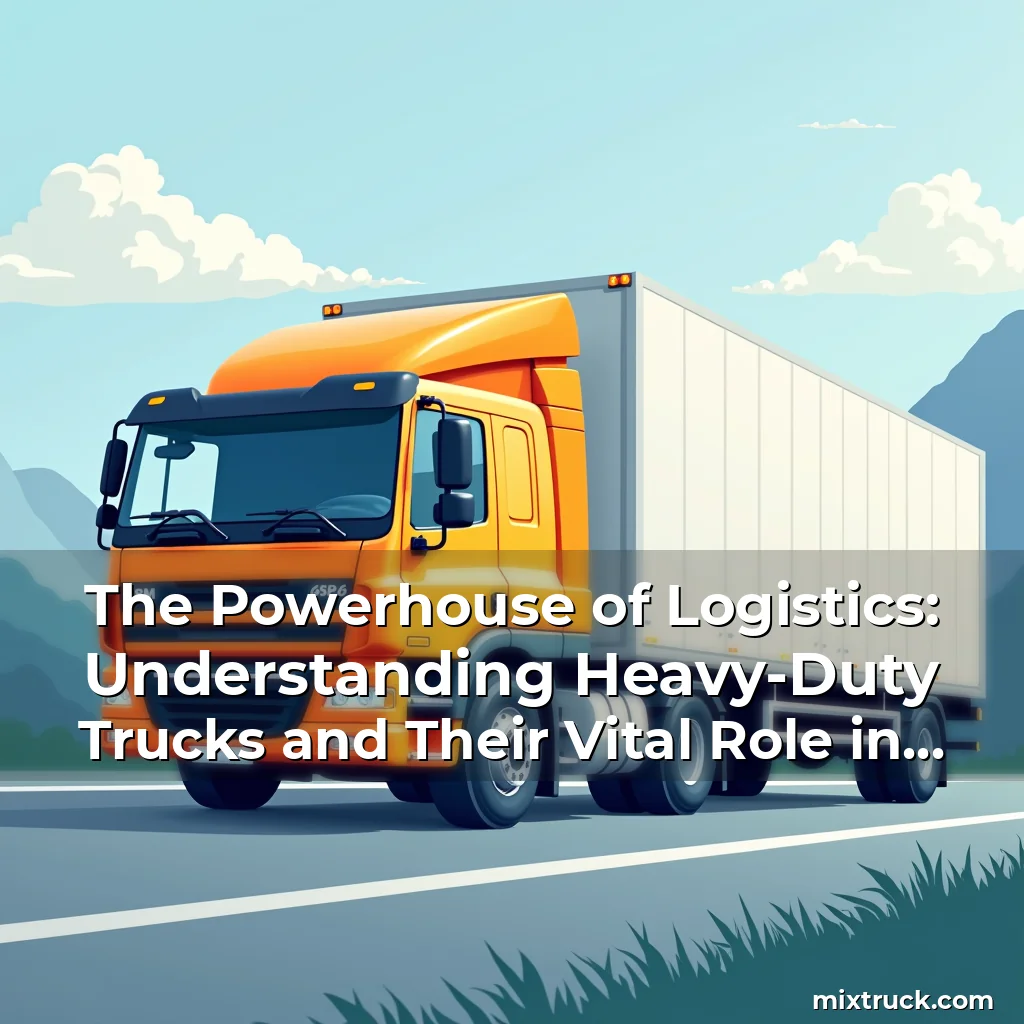
The Powerhouse of Logistics: Understanding Heavy-Duty Trucks and Their Vital Role in Modern Industry
In an era where global supply chains span continents and demand efficiency at every turn, the unsung heroes behind the scenes are none other than heavy-duty trucks. These colossal machines form the backbone of modern transportation, ensuring that goods reach their destinations swiftly and safely.
With engines designed for endurance and chassis built for resilience, these vehicles are engineered to handle the most demanding tasks. From hauling construction materials across rugged terrains to transporting refrigerated cargo under strict temperature control, heavy-duty trucks adapt seamlessly to diverse challenges.
The Evolution of Heavy-Duty Trucking Technology
The history of heavy-duty trucking is a testament to human ingenuity and industrial progress. Early models from the early 20th century were rudimentary by today’s standards, relying on basic internal combustion engines and simple mechanical systems.
Over decades, technological advancements have transformed these vehicles into highly sophisticated machines equipped with advanced telematics, fuel-efficient powertrains, and safety features previously unimaginable. Innovations such as automated transmissions and electronic stability control have significantly enhanced operational reliability.
- Fuel Efficiency Improvements: Modern diesel engines now achieve up to 45% better mileage compared to models from the 1980s through improved combustion technology and exhaust gas recirculation systems.
- Telematics Integration: GPS tracking combined with real-time diagnostics allows fleet managers to optimize routes, monitor vehicle health, and reduce maintenance downtime by over 30%
Diverse Applications Across Industries
Heavy-duty trucks serve critical roles beyond traditional freight transport, adapting to specialized needs across various sectors. In construction sites worldwide, dump trucks haul tons of earth while flatbed trailers carry massive machinery components.
Refrigeration units mounted on tractor-trailers maintain precise temperatures for perishable goods, enabling food distribution networks to operate efficiently. Meanwhile, garbage collection trucks utilize compaction mechanisms to maximize waste capacity during single trips.
Specialized Variants and Their Functions
The classification system for heavy-duty trucks includes several key categories based on function and design specifications. Tanker trucks transport liquids ranging from gasoline to hazardous chemicals using double-walled tanks for safety compliance.
Tandem axle configurations provide enhanced load distribution capabilities, making them ideal for transporting oversized loads like wind turbine blades or prefabricated building modules. Lowboy trailers offer extra clearance for tall equipment shipments requiring minimal ground height.
Engine Specifications and Performance Metrics
Modern heavy-duty truck engines represent engineering marvels capable of producing immense torque output necessary for moving payloads exceeding 80,000 pounds. Cummins X15 and Detroit Diesel DD16 engines exemplify current industry benchmarks with horsepower ratings surpassing 600 HP.
These high-output engines employ turbocharging and intercooling technologies to maintain performance even under extreme conditions. The compression ratio typically ranges between 14:1 to 18:1 depending on engine type and application requirements.
Safety Features and Operational Standards
Ensuring driver safety remains paramount in the design philosophy of contemporary heavy-duty trucks. Airbag systems integrated with crumple zones absorb impact energy during collisions, protecting occupants from severe injuries.
Electronic Stability Control (ESC) systems continuously monitor vehicle dynamics and automatically apply brakes to individual wheels when skidding occurs. This feature has been shown to reduce rollover accidents by approximately 49% according to NHTSA studies.
- Advanced Driver Assistance Systems (ADAS): Lane departure warnings, blind spot detection, and automatic emergency braking help prevent common accident scenarios involving large commercial vehicles.
- Vision Enhancement Technologies: Cameras providing 360-degree visibility around the vehicle enhance maneuverability in tight spaces commonly encountered in urban delivery operations.
Maintenance Protocols and Longevity Expectations
Prolonged operation of heavy-duty trucks requires rigorous maintenance schedules to ensure optimal performance and longevity. Routine inspections covering brake systems, suspension components, and tire pressure are essential for maintaining roadworthiness.
Recommended service intervals vary depending on usage patterns but generally include oil changes every 15,000 miles and filter replacements at similar intervals. Hydraulic systems require periodic checks to detect leaks or component wear before they cause failures.
A preventive maintenance approach can extend vehicle lifespan by up to 30%, reducing overall lifecycle costs associated with repairs and premature replacement. Regular software updates for onboard diagnostic systems also play a crucial role in predictive maintenance strategies.
Economic Impact and Environmental Considerations
Heavy-duty trucks contribute significantly to national economies through job creation and infrastructure development while simultaneously presenting environmental challenges related to emissions and fuel consumption. According to the U.S. Department of Energy, the freight sector accounts for nearly 28% of total transportation-related greenhouse gas emissions.
Ongoing research focuses on developing alternative propulsion systems including battery-electric options and hydrogen fuel cells to mitigate environmental impacts without compromising payload capacities. Some manufacturers have already introduced hybrid models combining conventional diesel engines with regenerative braking technology.
The transition toward greener alternatives faces hurdles related to range limitations and charging infrastructure availability. However, improvements in lithium-ion battery technology suggest promising future prospects for electrification of long-haul freight operations within the next decade.
The Future of Heavy-Duty Trucking: Innovation and Sustainability
As industries evolve, so too must the technology powering heavy-duty truck fleets. Emerging innovations promise to reshape logistics operations through greater automation, connectivity, and sustainability initiatives.
Autonomous driving technologies continue advancing rapidly, with pilot programs testing self-driving trucks along designated corridors. These developments could revolutionize supply chain management by optimizing route efficiency and reducing labor costs.
Connectivity solutions enable real-time data sharing among vehicles, allowing for dynamic rerouting based on traffic conditions or weather disruptions. Such capabilities enhance overall network efficiency while minimizing delays caused by unforeseen circumstances.
The push towards sustainability extends beyond mere emission reductions; it encompasses entire value chains from raw material sourcing to end-of-life recycling processes. Manufacturers are increasingly adopting circular economy principles to minimize resource depletion and waste generation.
Choosing the Right Heavy-Duty Truck for Your Needs
Selecting an appropriate heavy-duty truck involves careful consideration of numerous factors including intended use, payload requirements, and geographic operating conditions. Fleet operators must evaluate whether standard cab configurations suffice or if specialized variants like sleeper cabs are necessary for long-distance haulage.
Load capacity calculations should account not only for gross weight limits but also for legal restrictions governing axle weights and bridge formulas applicable in different jurisdictions. Properly distributing cargo ensures compliance with regulations and maintains vehicle integrity.
Environmental considerations influence purchasing decisions as well, prompting some companies to explore electric or hybrid models despite higher initial investment costs. Government incentives often offset these expenses while aligning business practices with corporate social responsibility goals.
Conclusion
From their humble beginnings to their current status as indispensable assets in global commerce, heavy-duty trucks have continually evolved alongside societal demands and technological advancements.
Understanding their multifaceted applications, technical specifications, and ongoing innovations enables stakeholders across industries to make informed decisions regarding procurement, operation, and future readiness in an ever-changing logistical landscape.