Introduction
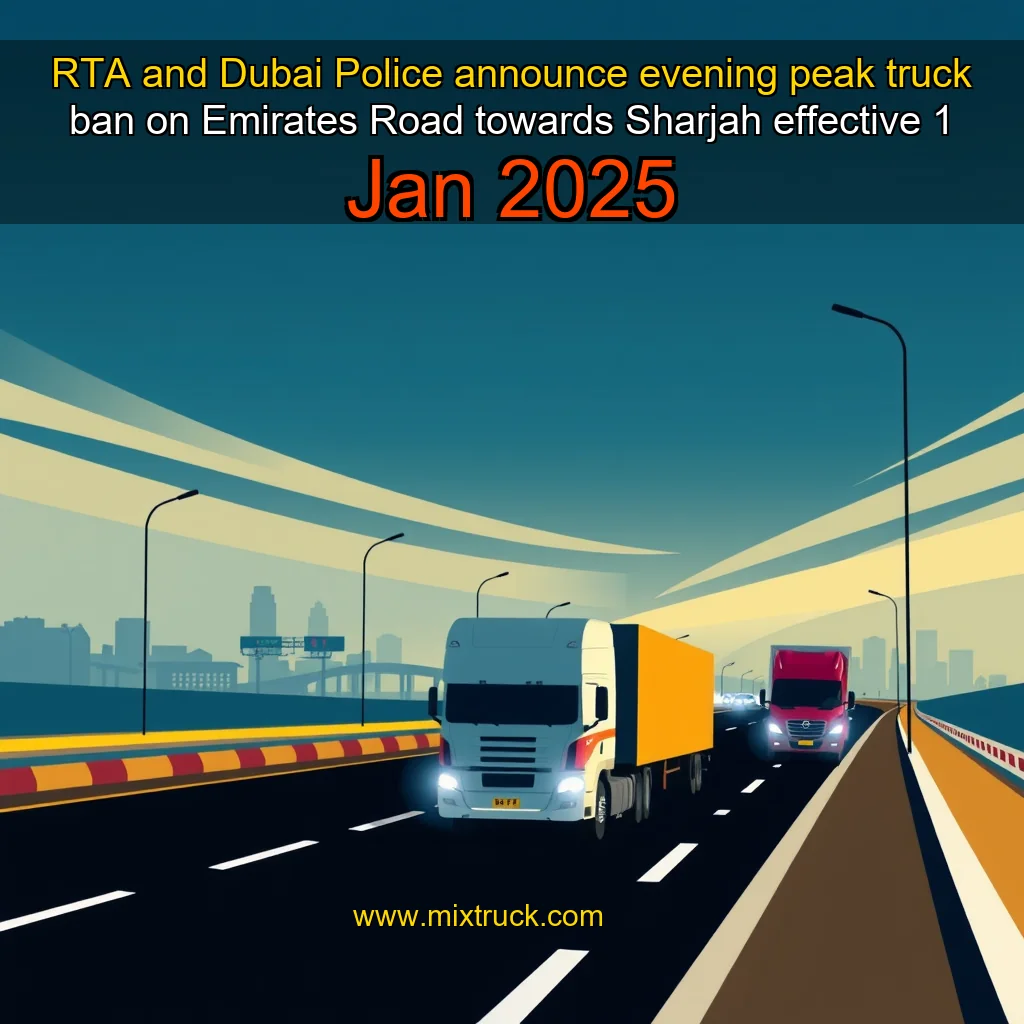
The Emirates Road, a vital transportation artery in the United Arab Emirates, is set to undergo a significant change with the implementation of a new restriction on truck movement. Starting from 1 January 2025, the section between Al Awir Street and Sharjah will be closed to trucks between 5:30 PM and 8:00 PM.
Trucks face restrictions in Dubai to maintain traffic flow and prevent congestion.
RTA also prohibits trucks from entering certain areas, such as the Dubai Marina and Jumeirah Beach areas.
Understanding the Truck Movement Ban in Dubai
RTA enforces truck movement bans on specific roads and streets across Dubai at varying times. This is done to ensure the smooth flow of traffic and to prevent congestion on major roads. The ban is enforced through a combination of physical barriers, signage, and digital systems.
Types of Truck Movement Bans
The Background of the Decision
The decision to ban truck movement on Emirates Road towards Sharjah during evening peak hours was not taken lightly. It was the result of an extensive study conducted by Dubai Police, which aimed to balance the safety needs of the public with the transportation demands of the region.
The Importance of Adhering to New Restriction Timings
The Dubai Police and the RTA have joined forces to educate the public about the new restriction timings for trucks and buses. This initiative aims to improve road safety and reduce congestion on Dubai’s roads.
Key Objectives
How the Initiative Works
The Dubai Police and the RTA have implemented a multi-faceted approach to educate the public about the new restriction timings.
The decision will also have a positive impact on the trucking industry, as it will increase the efficiency of the trucking system and reduce costs for trucking companies.
The Benefits of Implementing a Truck Lane System
Reducing Truck-Related Accidents
The introduction of a truck lane system is expected to significantly reduce truck-related accidents during peak hours. This is because the dedicated lanes will provide a clear and separate path for trucks to travel, reducing the risk of collisions with other vehicles. By providing a safe and efficient route for trucks, the system will help to minimize the number of accidents that occur on the road. Key benefits of reduced truck-related accidents: + Reduced risk of injury or death for drivers and passengers + Reduced damage to vehicles and property + Reduced congestion and delays for other road users + Improved overall road safety
Environmental Sustainability
The implementation of a truck lane system will also contribute to environmental sustainability by reducing traffic congestion, fuel consumption, and pollutant emissions. By providing a dedicated route for trucks, the system will help to reduce the number of trucks on the road, which in turn will reduce the amount of fuel consumed and the amount of pollutants emitted. Environmental benefits of reduced traffic congestion: + Reduced air pollution + Reduced greenhouse gas emissions + Reduced noise pollution
+ Reduced carbon footprint + Reduced reliance on fossil fuels + Reduced waste and pollution
Positive Impact on the Trucking Industry
The introduction of a truck lane system will also have a positive impact on the trucking industry. By providing a dedicated and efficient route for trucks, the system will help to increase the efficiency of the trucking system and reduce costs for trucking companies.
The Background of the Ban
The ban on trucks carrying hazardous materials is part of a broader effort by the RTA to enhance road safety and reduce the risk of accidents. The RTA has been working closely with various stakeholders, including Dubai Police, the Department of Economy and Tourism, DP World, and Dubai Airports, to implement this policy. The ban aims to minimize the risk of accidents and reduce the number of hazardous materials transported on the roads. The RTA has identified specific routes and areas where the ban will be enforced.
The initiative aims to enhance the safety and efficiency of truck traffic in the region.
Introduction
The Regional Transportation Authority (RTA) has been working tirelessly to improve the infrastructure for truck traffic in the region. One of the key initiatives is the implementation of a developmental plan for truck rest areas. This plan, which is being carried out in collaboration with the private sector, aims to enhance the safety and efficiency of truck traffic in the region.
The Plan
The plan involves the construction of 19 new truck rest areas and stations. These rest areas will provide essential services to truck drivers, including food, water, and restrooms.
The stations will be located at the intersection of the highway and the local road, and will provide a safe and secure environment for drivers to wait for their vehicles to be serviced or repaired. The stations will be equipped with amenities such as seating, lighting, and refreshments, making them an attractive option for drivers who may be waiting for an extended period.
The Importance of Driver Safety and Welfare
The development of these integrated stations is crucial for ensuring the safety and welfare of drivers who are waiting for their vehicles to be serviced or repaired.