The Impact of Environmental Regulations on the Trucking Industry
The Massachusetts government has implemented a series of environmental regulations aimed at reducing carbon emissions from the trucking industry. The regulations, which have been in effect since 2020, have had a significant impact on the sale of semi and other heavy-duty trucks in the state.
The Regulations
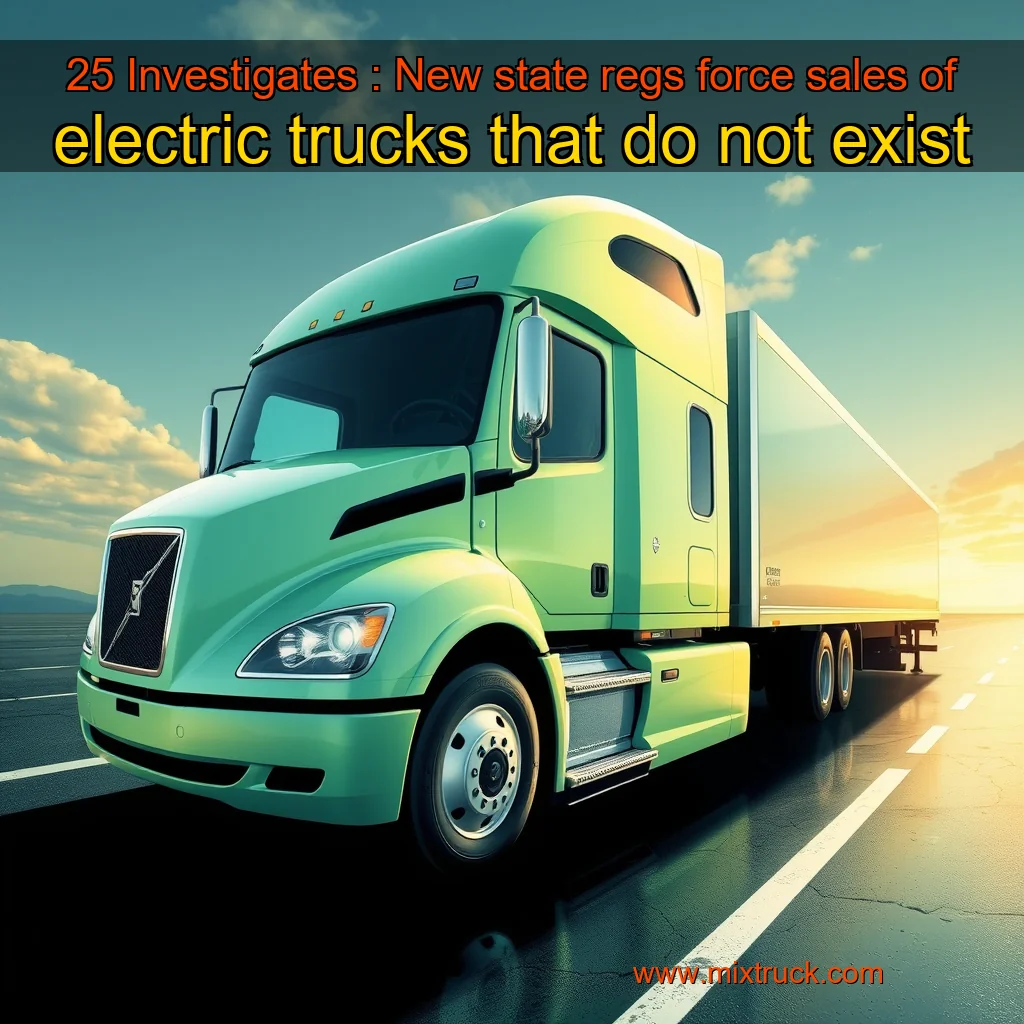
The regulations, which were designed to reduce carbon emissions, prohibit the sale of diesel trucks unless the manufacturer has a buyer for an electric truck. This means that manufacturers must have a guaranteed market for electric trucks before they can sell diesel trucks. The regulations also require manufacturers to provide incentives for buyers to purchase electric trucks.
The Consequences
The consequences of these regulations have been far-reaching. The sale of semi and other heavy-duty trucks has plummeted by 99% in Massachusetts. This has had a significant impact on the trucking industry, with many manufacturers and dealerships struggling to adapt to the new regulations. The decline in diesel truck sales has led to a significant reduction in greenhouse gas emissions from the trucking industry in Massachusetts. The regulations have also led to a shift in consumer behavior, with many buyers opting for electric trucks over diesel trucks. The impact on the trucking industry has been felt across the state, with many small businesses and entrepreneurs struggling to adapt to the new regulations.
The Future of the Industry
Despite the challenges posed by the regulations, many manufacturers and industry experts believe that the future of the electric truck market is bright. The regulations have provided a much-needed boost to the industry, and many manufacturers are now investing heavily in electric truck production. The regulations have also led to the development of new technologies and innovations in the electric truck market.
The regulation is part of a broader effort to reduce greenhouse gas emissions in the state.
The Impact of the ACT Regulation
A Shift in the Automotive Industry
The ACT regulation marks a significant shift in the automotive industry, as it sets a new standard for the sale of new vehicles in Massachusetts. The regulation requires a minimum of 20% of new vehicles sold in the state to be zero-emission vehicles by 2025, increasing to 50% by 2030, and finally, 100% by 2036. The regulation applies to all new vehicles sold in Massachusetts, including passenger cars, light trucks, and commercial vehicles. The regulation does not apply to used vehicles, which can still be sold in the state.*
Environmental Benefits
The ACT regulation is expected to have a significant impact on reducing greenhouse gas emissions in Massachusetts.
The Need for Public Charging Infrastructure
The lack of public charging infrastructure in Massachusetts is a pressing concern for the trucking industry. With the increasing adoption of battery-powered big rigs, the need for reliable and accessible charging stations is becoming more urgent. The Massachusetts Sierra Club has been vocal about the issue, stating that truck manufacturers have been involved in creating the new regulations. The regulations aim to reduce greenhouse gas emissions from the transportation sector, which is a significant contributor to climate change. The regulations also aim to improve air quality in urban areas, which is a major concern for public health. The regulations require truck manufacturers to develop and implement sustainable technologies, such as battery-powered big rigs.
The Role of Truck Manufacturers
Truck manufacturers have been accused of being involved in creating the new regulations. While the exact nature of their involvement is unclear, it is evident that they have a vested interest in the outcome. The regulations aim to reduce greenhouse gas emissions and improve air quality, which are key concerns for the trucking industry. The regulations also aim to reduce the environmental impact of the transportation sector, which is a significant contributor to climate change.
The Impact on Public Charging Infrastructure
The lack of public charging infrastructure in Massachusetts is a significant concern. There are currently zero public charging stations specifically designed to accommodate battery-powered big rigs in Massachusetts.
Massachusetts is investing in a network of fast-charging stations along highways and interstates.
The Rise of Electric Vehicle Charging Infrastructure in Massachusetts
The state of Massachusetts is taking significant steps to support the adoption of electric vehicles (EVs) by investing heavily in the development of charging infrastructure. With the goal of reducing greenhouse gas emissions and promoting sustainable transportation, the state is focusing on creating a comprehensive network of fast-charging stations along highways and interstates.
Key Components of the Charging Infrastructure Plan
The Impact of DEP’s Decision on Municipalities
The decision by the Department of Environmental Protection (DEP) to pause enforcement of Act 6 regulations for cities and towns that purchase vehicles used in snow removal has significant implications for municipalities across the state. These regulations, which were put in place to reduce greenhouse gas emissions, have been a contentious issue among local governments. The regulations, which were implemented in 2019, require municipalities to purchase vehicles that meet certain emissions standards. The regulations also require municipalities to report their greenhouse gas emissions and develop plans to reduce them. The pause in enforcement, which was announced in 2022, applies to cities and towns that purchase vehicles used in snow removal, such as dump trucks and front-end loaders.
The Concerns of Municipalities
Municipalities have expressed concerns about the impact of the pause in enforcement on their ability to maintain public safety and provide essential services during the winter months. They argue that the regulations, while well-intentioned, are too burdensome and will lead to increased costs and decreased efficiency.
Diesel shortage hits Massachusetts truck operators hard due to stricter emissions standards.
The Diesel Dilemma in Massachusetts
The state’s environmental regulations have led to a shortage of newer, cleaner diesel models, leaving truck operators with limited options. The Massachusetts Department of Environmental Protection (MassDEP) has implemented stricter emissions standards for diesel vehicles, which has resulted in a shortage of newer models that meet these standards.