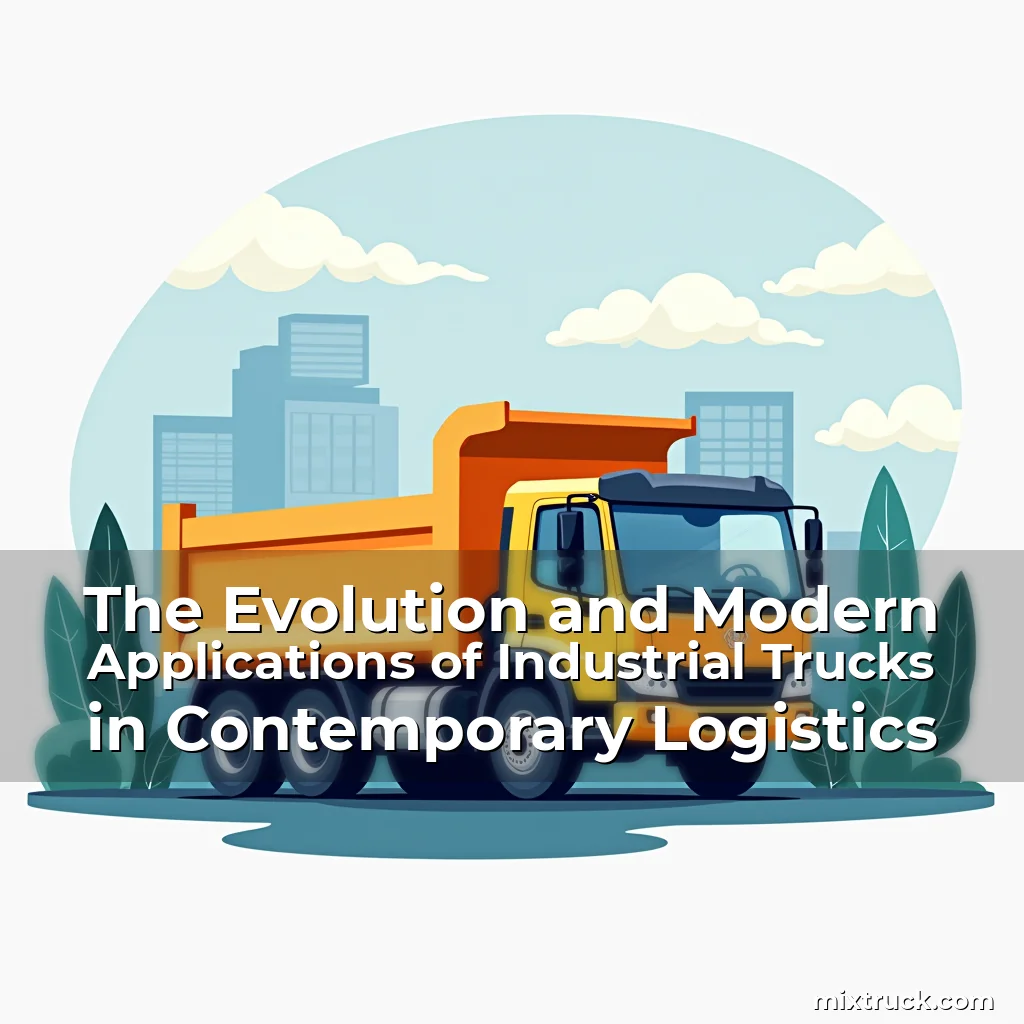
The Evolution and Modern Applications of Industrial Trucks in Contemporary Logistics
In an era where supply chains span continents and warehouses operate around the clock, industrial trucks have become indispensable tools that underpin modern logistics operations. These robust machines are engineered to handle heavy loads, navigate confined spaces, and endure demanding environments, making them essential across various industries.
Ranging from electric-powered forklifts to high-capacity straddle carriers, industrial trucks come in diverse forms tailored to meet specialized needs. Their integration into automation systems has further revolutionized material handling efficiency, ensuring seamless productivity even in the most complex logistical networks.
Understanding the Core Functionality of Industrial Trucks
At their core, industrial trucks serve as mechanical workhorses designed for lifting, transporting, and stacking goods within facilities such as manufacturing plants, distribution centers, and ports. They play a crucial role in streamlining workflows by reducing manual labor requirements and minimizing operational delays.
Modern designs incorporate advanced safety features including anti-collision sensors, load stability indicators, and emergency stop mechanisms. These innovations help prevent accidents while enhancing overall workplace safety standards in high-intensity environments.
One of the defining characteristics of industrial trucks is their adaptability. Manufacturers offer models equipped with different types of forks, attachments, and mobility options to suit varied applications—from palletizing products on assembly lines to loading cargo onto freight containers.
Categorically, these vehicles can be classified based on power sources, which include internal combustion engines running on diesel or gasoline, battery-operated variants using lead-acid or lithium-ion cells, and hybrid solutions combining both technologies for optimal performance.
Diverse Types of Industrial Trucks and Their Specializations
The wide array of industrial truck types reflects the multifaceted demands of contemporary logistics. From standard counterbalance forklifts used extensively in warehouses to narrow aisle reach trucks optimized for tight storage conditions, each model addresses distinct challenges faced during material handling processes.
Towing tractors represent another category commonly employed in outdoor settings such as airports and construction sites. These rugged vehicles pull trailers loaded with materials over long distances without requiring frequent refueling stops, thereby improving transport efficiency significantly.
- Forklifts: The most common type found inside warehouses; available in sit-down rider and stand-up operator configurations depending upon required maneuverability levels.
- Pallet jacks: Manual or powered devices ideal for moving lighter loads manually through aisles before transferring them onto larger machinery for higher elevation tasks.
- Stacker cranes: Automated vertical lift machines utilized primarily in automated storage systems where space optimization is critical.
- Straight stackers: Similar functionally to forklifts but specifically adapted for working within narrow aisles typically found in compact racking setups.
Specialty equipment includes telescopic handlers capable of reaching elevated heights necessary when constructing buildings or installing infrastructure components at great altitudes safely.
Electric forklifts have gained increasing popularity due to lower emissions compared to traditional fuel-based alternatives. This shift aligns well with global sustainability goals aimed at reducing carbon footprints associated with commercial transportation sectors.
Technological Advancements Shaping Future Industrial Truck Designs
Recent years have witnessed remarkable technological progressions influencing how industrial trucks perform their duties today. Innovations range from autonomous navigation capabilities allowing remote operation to AI-driven predictive maintenance algorithms that anticipate potential failures before they occur.
The incorporation of IoT (Internet of Things) technology enables real-time monitoring of vehicle health parameters such as tire pres
Data analytics plays a pivotal role here too—by collecting usage patterns and identifying inefficiencies inherent within current operational frameworks, companies can implement targeted improvements leading towards enhanced productivity metrics across entire supply chain ecosystems.
Autonomous guided vehicles (AGVs), once limited mainly to controlled factory floors, now roam freely between interconnected warehouse modules thanks to sophisticated mapping software combined with laser guidance systems providing precise location tracking accuracy down to millimeters.
Impact of Automation on Workforce Dynamics
As automation becomes increasingly prevalent within industrial truck operations, there exists both opportunity and challenge regarding workforce transformation. While some roles may diminish due to mechanization efforts, new positions emerge centered around managing digital infrastructures supporting smart logistics initiatives.
Accordingly, training programs focused on teaching operators skills related to programming AGV routes or interpreting data dashboards will likely grow in importance alongside conventional instruction covering basic machine operation techniques.
A survey conducted recently among logistics professionals indicated approximately 68% believed increased adoption rates of automated solutions would eventually replace human involvement entirely in routine material movement activities whereas only 32% anticipated significant job loss scenarios affecting frontline workers directly engaged daily with physical equipment.
This disparity suggests ongoing discussions concerning ethical implications surrounding full-scale implementation strategies involving artificial intelligence integration within existing infrastructural layouts must continue until balanced approaches considering economic viability against social responsibility factors achieve consensus.
Environmental Considerations Driving Green Fleet Initiatives
With growing emphasis placed upon environmental stewardship globally, many organizations are transitioning toward greener fleet compositions incorporating zero-emission industrial trucks wherever feasible. Electric alternatives present compelling advantages over fossil-fuel dependent counterparts particularly in enclosed indoor environments prone to air quality degradation issues otherwise caused by exhaust fumes.
Battery-electric models not only eliminate harmful pollutants but also reduce noise pollution levels substantially—an especially beneficial attribute in urban areas where strict regulations govern permissible sound thresholds originating from industrial premises.
Lithium-ion batteries currently dominate the market owing largely to superior energy density properties enabling extended operating durations between recharging cycles relative to older lead-acid versions previously dominating earlier generations of electrified transport solutions.
Hybrid systems provide transitional benefits allowing gradual migration away from purely petroleum-derived fuels towards fully sustainable electricity-based propulsion methods suitable for future-oriented enterprise objectives prioritizing ecological impact reduction measures prominently featured within corporate ESG reporting frameworks.
Economic Implications of Investing in Industrial Truck Fleets
Acquiring industrial trucks represents a substantial capital investment decision impacting organizational budgets profoundly. However, careful analysis reveals numerous cost-saving opportunities arising from improved throughput efficiencies achieved through mechanized assistance versus reliance solely upon manual labor resources.
Initial expenditures involve purchasing units themselves along with ancillary accessories like charging stations for electric models plus regular servicing contracts ensuring longevity periods exceeding typical depreciation schedules experienced with less durable asset classes.
Nevertheless, long-term savings manifest clearly through reduced downtime instances attributable to quicker loading/unloading procedures facilitated by versatile mechanical arms integrated seamlessly into overarching workflow architectures already established throughout respective value creation pathways.
Moreover, insurance premiums often decrease following certification completions attesting compliance adherence with stringent OSHA guidelines governing safe handling practices mandatory prior authorization permits granting access privileges onto designated operational zones restricted exclusively to trained individuals possessing appropriate credentials verifying technical proficiency standards deemed adequate safeguarding occupants’ welfare amidst potentially hazardous situations.
Safety Protocols Governing Operation Standards
Ensuring occupational safety remains paramount concern throughout lifecycle management phases associated with deploying industrial trucks across vast geographical territories encompassing diverse climatic conditions conducive neither to uniformity nor predictability regarding external variables affecting functional reliability consistently.
Mandatory training regimens constitute foundational element underpinning successful implementations wherein theoretical knowledge acquisition precedes practical demonstrations culminating final evaluations confirming readiness levels attained meeting prescribed benchmarks set forth regulatory bodies overseeing public health protections pertinent occupational hazards inherently tied together with heavy machinery utilization protocols.
Regular inspections scheduled periodically according to manufacturer recommendations coupled with random checks performed unannounced enhance vigilance maintaining peak condition statuses mitigating risks exposure incidents resulting from undetected malfunctions occurring sporadically despite diligent care exercised routinely maintained upkeep routines integral preserving integrity structural components vital sustaining operational effectiveness over prolonged service lifespans.
Furthermore, implementing clear signage delineating pedestrian walkways separate from vehicular traffic corridors reduces likelihood collisions transpiring simultaneously navigating shared workspace areas necessitating heightened awareness cultivated through consistent reinforcement emphasizing situational awareness principles ingrained deeply behavioral norms adopted universally across all participating stakeholders irrespective hierarchical distinctions prevailing institutional structures.
Future Trends Influencing Next Generation Industrial Trucks
Looking ahead, emerging trends suggest continued evolution toward smarter, safer, and more environmentally friendly industrial truck solutions. Developments in solid-state battery technology promise longer runtime capacities accompanied by accelerated recharge times poised to redefine expectations regarding continuous operation capabilities previously constrained limitations imposed traditional power sources.
Collaborative robotics (cobots) integrating seamlessly alongside human operators represent another frontier being actively explored wherein semi-autonomous assistants augment rather than supplant organic contributions facilitating harmonious coexistence fostering synergistic enhancements elevating collective output figures exponentially surpassing isolated individual performances achievable independently absent cooperative engagements promoting mutual growth trajectories aligned strategic visionaries steering industry direction forward collectively shaping tomorrow’s landscape.
Additionally, advancements in 5G connectivity enable instantaneous communication exchanges occurring wirelessly eliminating latency concerns impeding responsiveness levels exhibited earlier iterations reliant slower network speeds hindering real-time adjustments critical optimizing dynamic environments characterized constant flux fluctuating demand profiles requiring immediate recalibration decisions executed swiftly accurately leveraging latest communications infrastructure developments.
Finally, customizable modular designs allow end-users tailor specifications precisely matching bespoke application requirements ensuring maximal return investments realized through optimized functionality aligned closely operational necessities confronting unique challenges encountered daily within specialized contexts differing markedly general-purpose deployments standardized templates incapable addressing nuanced subtleties distinguishing particular use cases warranting personalized adaptations maximizing utility derived custom-tailored apparatuses crafted accordingly.
Conclusion
Industrial trucks remain cornerstone elements propelling modern logistics operations forward through relentless innovation driving continual improvements enhancing efficiency, safety, and sustainability concurrently. As we look toward future horizons filled immense possibilities unfolding rapidly evolving technological landscapes, embracing change proactively proves imperative staying competitive within ever-shifting market dynamics dictated ceaseless pursuit excellence permeating every facet contemporary business enterprises striving thrive amid escalating global competition intensifying day-by-day.
By investing wisely in cutting-edge industrial truck solutions while adhering strictly rigorous safety standards cultivating cultures valuing employee development continuously adapting strategies reflecting latest research findings emerging fields, organizations position themselves effectively harness transformative potentials awaiting discovery exploration realizing full extent benefits promised next generation paradigms redefining boundaries conventional understanding domain forevermore.