
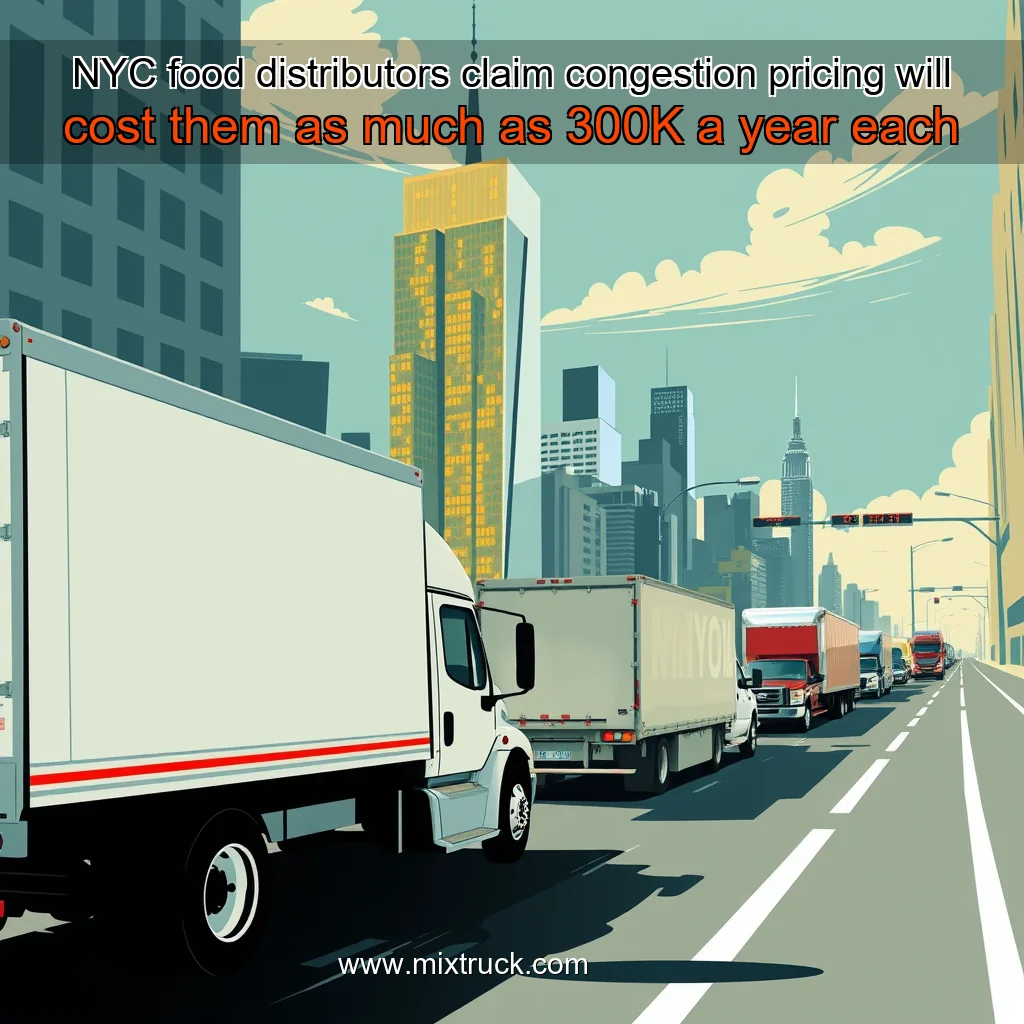
The Impact of Congestion Tolls on Food Distributors
The proposed congestion tolls in New York City are expected to have a significant impact on the food distribution industry. The NYC Food Distribution Alliance, a coalition of food distributors, testified before state lawmakers on Thursday to plead for an exemption for delivery trucks. The alliance argued that the tolls would increase the cost of transporting food to retailers, making it more difficult for them to operate profitably. Key points to consider: + Increased transportation costs + Reduced profit margins + Potential job losses
The Economic Burden on Food Distributors
The proposed congestion tolls are expected to increase the cost of transporting food to retailers by up to 20%.
The company has been paying these tolls for over 20 years, but the cost has increased significantly over the years due to rising toll rates and increased truck traffic.
The Tolling Problem
LP Brands is not alone in its struggles with tolls. Many businesses, particularly those in the transportation and logistics industry, face similar challenges. The company’s experience highlights the need for a more efficient and equitable toll system that takes into account the varying needs of different businesses and industries. Key statistics: + 20 years of paying tolls + $500-$600 weekly tolls + Increased toll rates and truck traffic
The Impact on Businesses
The tolls imposed on LP Brands have a significant impact on the company’s bottom line. The weekly tolls of $500-$600 are a substantial expense that can eat into the company’s profit margins. This can be particularly challenging for businesses that operate on thin profit margins or have limited financial resources. Examples of businesses affected by tolls: + Small businesses with limited financial resources + Large corporations with high overhead costs + Industries with high transportation costs
The Need for Reform
The current toll system is often criticized for being unfair and inefficient. The tolls imposed on businesses can be a significant burden, particularly for those that are already struggling to stay afloat.
The group was formed to address the food distributor group’s concerns about the proposed changes to the New York City food distribution regulations. The group was led by Baldor, which had been a major player in the industry for over 50 years.
The Formation of the Food Distributor Group
In December 2022, a coalition of 100 businesses, including some of the largest players in the New York City food distribution industry, came together to form a unified front against the proposed changes to the city’s food distribution regulations. The group, which was led by Baldor, a company with over 50 years of experience in the industry, was formed in response to concerns about the potential impact of the changes on the livelihoods of food distributors and the overall food supply chain.
Key Concerns of the Food Distributor Group
The Role of Baldor in the Formation of the Group
Baldor, as the leader of the group, played a crucial role in bringing together the various businesses and stakeholders to form a unified front against the proposed changes.
and 5 a.m. on weekdays, and for deliveries between 5 a.m. and 9 p.m. on weekends. The discounts are $1.40 for weekday deliveries between 9 p.m.
However, the Alliance is concerned that the delayed delivery will impact the Food Bank’s ability to provide meals to those in need.
The Alliance’s Concerns
The Alliance is worried that the delayed delivery will have a ripple effect on the entire food system. They believe that the Food Bank’s ability to provide meals to those in need is crucial, and that any disruption to their operations could have far-reaching consequences. The Alliance points out that the Food Bank serves over 1.5 million people per year, and that their meals are often the only source of nutrition for those who are struggling to make ends meet. The Alliance is concerned that the delayed delivery will not only impact the Food Bank’s ability to provide meals, but also the restaurants and other food establishments that rely on the Food Bank for their ingredients.
“There is no savings for us with congestion pricing,” MacGregor said. “It’s all stick, no carrot.”